
Garden equipment encompasses all manual tools, powered tools, and accessories used to cultivate, maintain, and design a green space. Choosing the right gardening equipment depends on three variables: the size of the land, the type of soil, and the type of vegetation present. A poorly sized tool causes more fatigue, damages plants, and often ends up stored away in the back of a shed.
Noise and regulatory constraints before purchasing powered tools
Before comparing lawn mowers or brush cutters, one factor weighs as heavily as power or price: local noise regulations. The time slots for using powered tools vary according to municipal or prefectural decrees. Adhering to an authorized schedule is not always enough: the Public Health Code (article R. 1334-31) allows a neighborhood noise to be classified as excessive based on its duration, repetition, or intensity.
In practice, a thermal hedge trimmer used repeatedly in a dense housing estate can generate complaints even during legal hours. Checking the rules of your municipality before investing in a powered tool avoids a costly purchase that you may hesitate to use. For gardens in tightly packed residential areas, a wired or battery-powered electric model significantly reduces noise levels.
Find all the equipment on the Le Jardineur website to compare the available ranges based on their power source and usage.
Land area and choice of lawn mower

The lawn mower remains the central tool for lawn maintenance. The main selection criterion is neither the brand nor the design, but the actual area to be mowed each week.
- For a small area (less than the size of a tennis court), a manual reel mower is sufficient. It makes no noise, consumes nothing, and provides a clean cut on short grass.
- For a medium-sized lawn, a wired or battery-powered electric mower represents the best compromise between power, weight, and noise nuisance. The battery life varies depending on the height and moisture of the grass: having a spare battery prevents interruptions during mowing.
- For a large area, a self-propelled thermal mower remains effective, but its weight and noise limit its use to spaces where the distance from neighbors allows it.
A robotic mower may seem convenient on all surfaces, but it requires special attention. Programmed at night or dusk, a robot can injure nocturnal animals (hedgehogs, amphibians). The recommendation is to limit its operation to daytime hours, which also reduces disturbances for neighbors.
Hand tools for working the soil and planting
The soil is the starting point for any productive or ornamental garden. Two approaches coexist: deep work and superficial work. The choice of tool directly follows from this.
The grelinette aerates the soil without turning over the layers, preserving microbial life. It is suitable for vegetable gardens and already established flower beds. The spade, more traditional, is still necessary for digging a planting hole or incorporating an amendment deeply.
On the surface, the hoe and the claw are used to break the soil crust, weed between rows, and prepare a seedbed. The shovel, often confused with the spade, is used to move soil, compost, or gravel, not to dig. Using the wrong tool shape for the wrong task strains the back and dulls the edge.
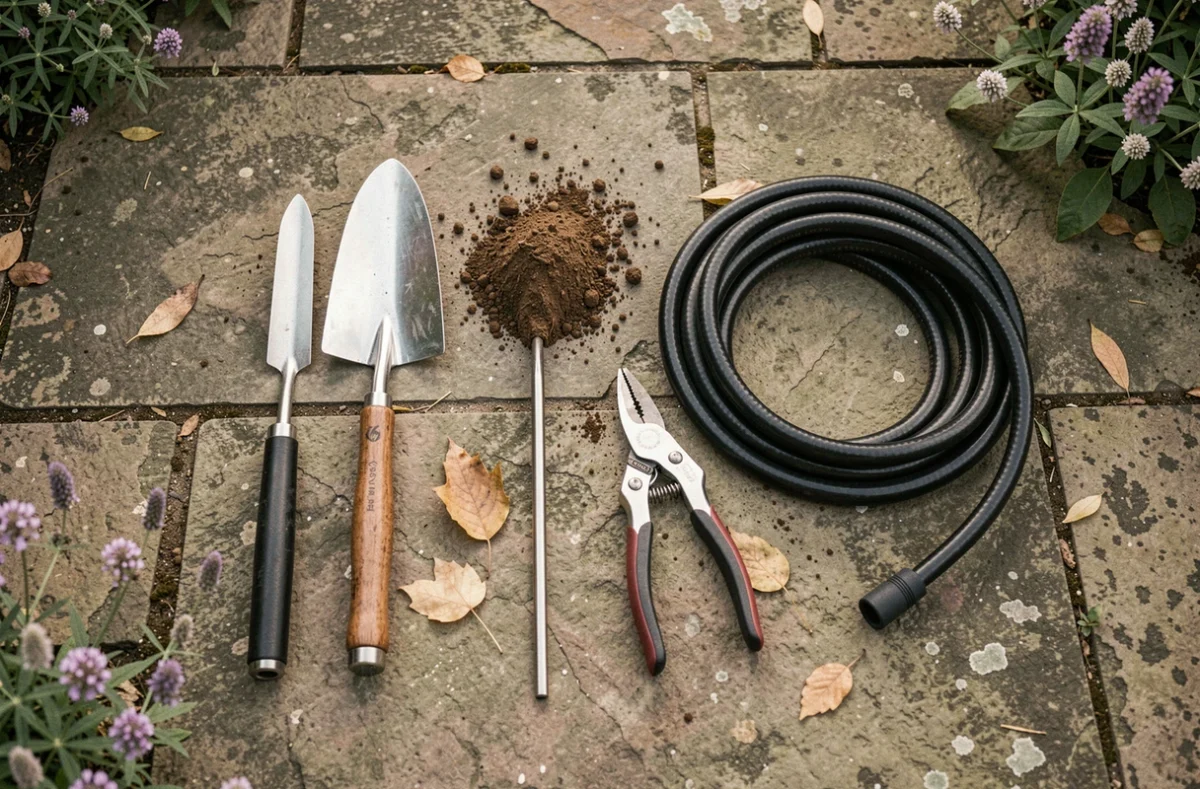
For pruning, the bypass pruner cuts green branches up to about two centimeters in diameter. Beyond that, a lopper (or branch cutter) with a ratchet mechanism multiplies the force without excessive effort. Trusting a branch that is too thick to a pruner damages it and crushes the wood instead of making a clean cut.
Battery, thermal, or wired: motorization and actual usage cost
The purchase price of a powered tool reflects only part of its cost. The cost of use depends on consumption, maintenance, and replacement of parts.
Thermal tools require regular maintenance (oil change, air filter, spark plug) and fuel. A battery tool seems simpler, but the battery itself has a limited lifespan in terms of charge cycles. In difficult conditions (tall grass, hard wood), the autonomy drops and the battery ages faster.
The main advantage of battery tools is interoperability. Several manufacturers offer a common battery platform among mowers, hedge trimmers, blowers, and brush cutters. Buying within the same battery ecosystem reduces the number of chargers and allows batteries to be shared between tools. This point should be verified before the first purchase rather than afterward.
Wired tools remain the cheapest to purchase and use, but their range depends on an extension cord. For a compact garden with an accessible outdoor outlet, it is often the most rational solution.
Watering and protection: two often underestimated aspects
Watering represents a significant aspect of gardening equipment. A simple garden hose with a multi-jet nozzle covers most needs of a modest-sized garden. For a vegetable garden or flower beds, a drip irrigation system reduces water consumption and targets the roots without wetting the foliage, which limits fungal diseases.
The protection of the gardener themselves is part of the equipment. Gloves suited to the type of task protect as much as they improve grip. A thin nitrile glove is suitable for transplanting, while a reinforced leather glove is necessary for handling brambles or thorny branches. Safety glasses and earplugs complete the gear as soon as a powered tool is involved.
Storage conditions the longevity of the equipment. A steel tool left damp in the grass rusts in a few days. A wall hook in a ventilated garden shed, an oiled cloth on the blades after use: these simple gestures double the lifespan of a pruner or spade without any additional investment.