
A dog scratching its ear non-stop for three days, a cat refusing its morning bowl, an electronic chip with a phone number linked to your old apartment: the daily care of a pet goes far beyond just pouring kibble into the bowl. Taking care of your companion involves a series of concrete actions, sometimes administrative, often underestimated.
I-CAD File and Identification: the Administrative Gesture We Forget
We microchip our dog or cat at the time of adoption, then we forget about it. The problem arises after a move or a change of phone number: the chip does not geolocate the animal; it refers to the contact details registered in the I-CAD file. If this information is outdated, finding a lost animal becomes nearly impossible.
Since January 2024, the I-CAD identification card is now digital. The organization no longer prints it. You must download it from your online account, which means you need to have created an account and keep it updated. This is a reflex to adopt with every change in personal situation, just like updating your postal address with your bank.
Resources like Boule de Poil regularly remind us of this type of preventive action, too often relegated to the background behind physical care.
Dog and Cat Nutrition: Adjusting the Ration to Actual Daily Needs
A shepherd dog spending its days outside and a French bulldog napping on a couch have different caloric needs, even at the same weight. The ration indicated on the back of the kibble bag provides a baseline, not a prescription. Adjusting the quantity to the actual activity level helps avoid two common pitfalls: gradual overweight and underfeeding of a very active animal.
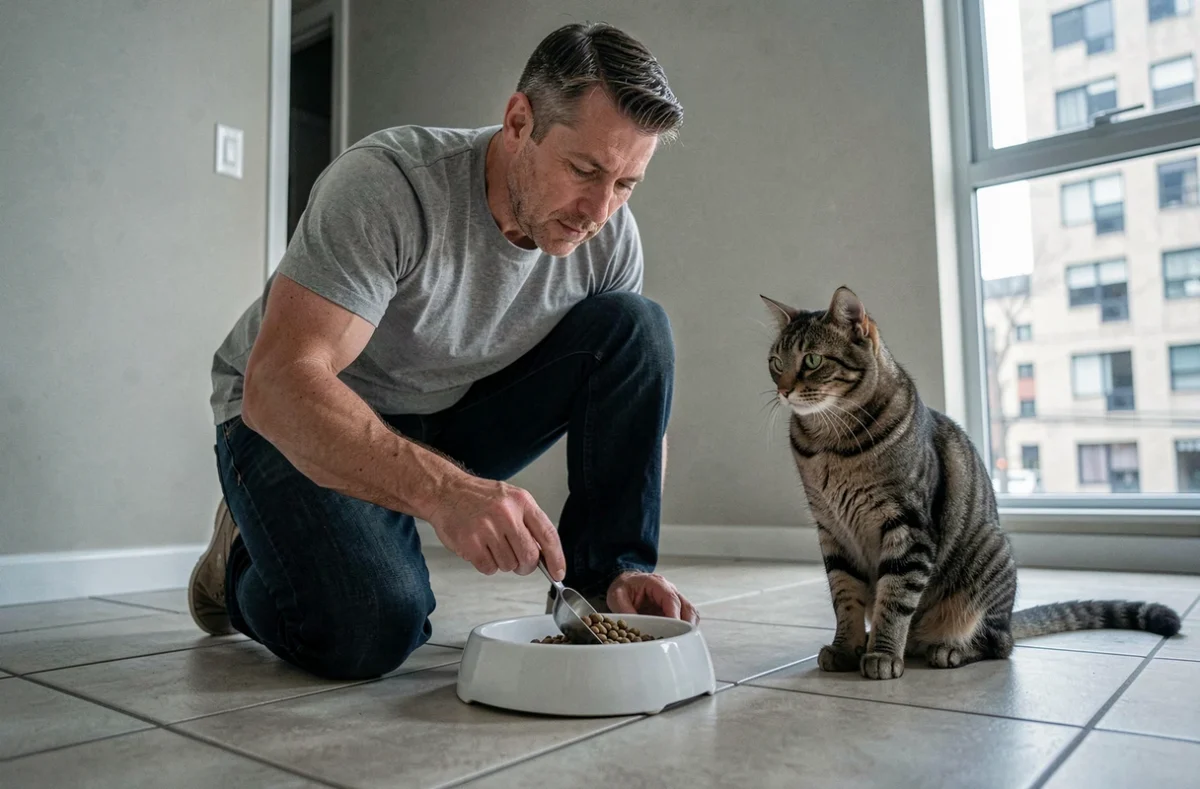
For cats, the challenge is different. An indoor cat regulates its food intake less effectively than a cat that hunts. Dividing food into several small portions throughout the day, or using a feeder that slows down ingestion, helps limit compulsive eating.
Water deserves as much attention as food. A bowl of water that has been stagnant since the day before is less appealing than fresh water. Some cats drink more with a water fountain, which reduces the risk of urinary problems in the long term.
Monitoring Weight Without a Veterinary Scale
You can assess your pet’s body condition by running your hands along its sides. If the ribs can be easily felt under a thin layer of fat, the weight is correct. If you have to press to find them, a veterinary consultation regarding the ration is necessary.
Ear, Dental, and Coat Hygiene: Frequency and Common Mistakes
Washing your dog too often weakens the lipid film that protects its skin. A monthly bath is sufficient in most cases. After swimming in the sea or a river, a rinse with clear water without shampoo is preferable to a systematic shampoo.
For regular care, here are the actions to calibrate according to the animal:
- Brushing the coat once or twice a week for short-haired breeds, daily for long-haired breeds, helps detect ticks, grass seeds, or skin irritations before they become problematic.
- Cleaning the ears with an appropriate solution (never with cotton swabs) is especially important for dogs with droopy ears, which are more prone to ear infections.
- Dental hygiene remains the most neglected care: regularly giving chew bones or dental sticks reduces tartar buildup, which can lead to costly gum infections.
For the eyes, gentle cleaning with a compress soaked in saline solution, once a week, is sufficient for most dogs and cats. Breeds with flat faces (Persian, Pug) require more frequent attention due to tear drainage.
Pet Health Insurance and Civil Liability: What Your Contract Really Covers
It is often thought that home insurance covers incidents involving your pet. Civil liability can indeed cover damages caused to third parties by your dog or cat, depending on the clauses of the contract. However, it generally does not cover veterinary expenses for your own animal.
Teeth cleaning, surgery after ingestion of a foreign body, treatment for a chronic illness: these expenses fall under specific pet health insurance. Before subscribing, checking annual caps, waiting periods, and breed exclusions helps avoid unpleasant surprises.

Another often unclear point: entrusting your pet to a friend does not automatically transfer legal responsibility. The question depends on who is actually supervising and controlling the animal at the time of a potential incident. Before leaving your dog in someone else’s care, clarifying instructions and checking applicable insurance coverage protects both parties.
Parasite Prevention and Veterinary Follow-up: The Calendar That Structures the Year
Parasite treatments (fleas, ticks, worms) only work if renewed according to a regular schedule. The frequency varies between products: some flea treatments cover one month, others three. Mixing brands inconsistently or forgetting a renewal exposes the animal to infestations that then spread to the home environment.
- Worming an adult dog at least twice a year, more often if it lives in a rural area or hunts.
- Treating against fleas and ticks continuously, including in winter in regions with mild climates.
- Inspecting the coat after each walk in the woods or tall grass to spot ticks and grass seeds, checking between the pads and behind the ears.
Annual veterinary follow-up remains the foundation of prevention. An annual health check helps detect silent pathologies (kidney failure in older cats, joint problems in large breed dogs) before they become difficult to manage.
The daily quality of life of a pet depends less on spectacular actions than on a consistent routine: up-to-date identification, adjusted nutrition, calibrated hygiene care, and a respected prevention calendar. It is these regular habits, not always visible, that make a difference over time.