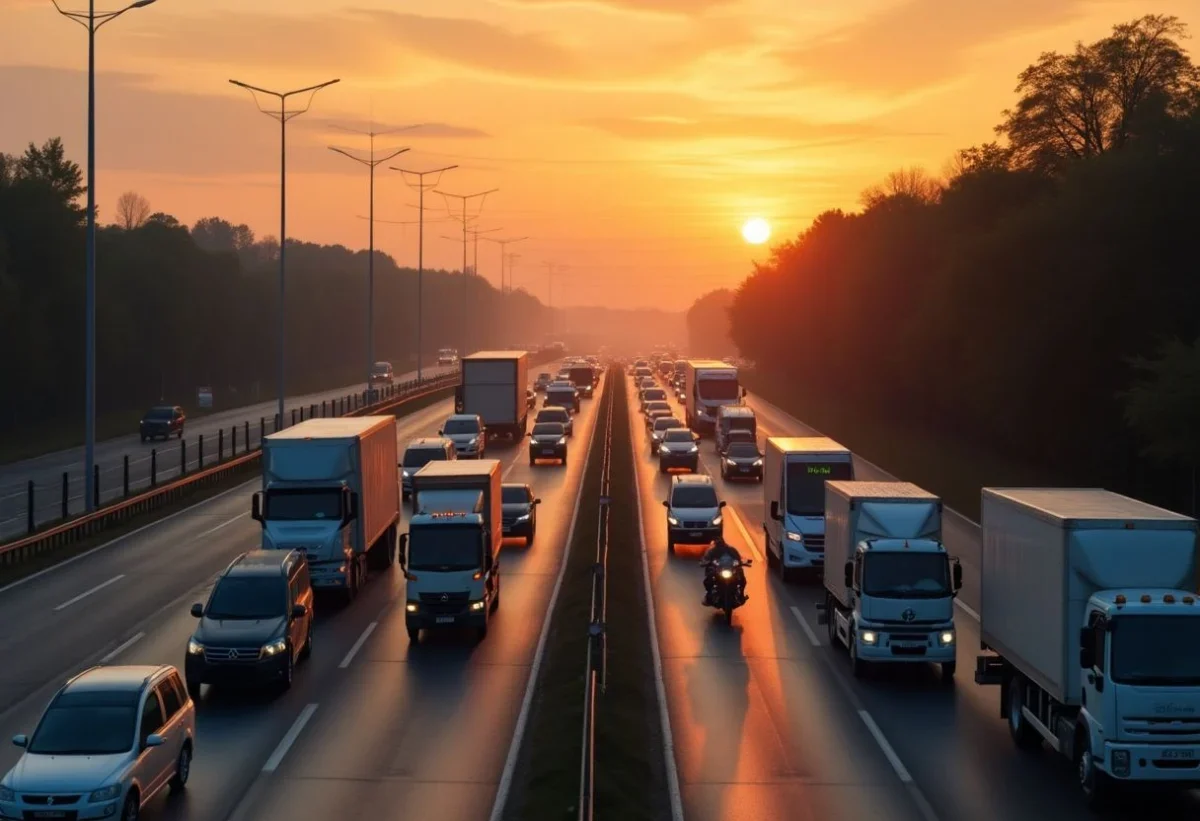
The modern world, in perpetual upheaval, demands fast and efficient transportation solutions that transcend geographical boundaries. International express transport has become the essential pillar of global exchanges, connecting businesses and individuals at lightning speed. This industry does not simply move goods from point A to point B; it shapes global economic relationships, driving trade and facilitating communication. As the demand for real-time transportation solutions intensifies, the strategic importance of this sector becomes more evident than ever.
The challenges of international express transport
Every day, millions of packages cross borders, testifying to the complexity and efficiency of the international express transport system. Behind this apparent simplicity lie major logistical and ecological challenges.
To meet growing demands, companies must navigate a series of logistical challenges, including managing delivery times, complying with customs regulations, and optimizing routes. These challenges require advanced technologies and impeccable coordination among various supply chain actors.
Ecologically, the pressure to reduce carbon footprints is palpable. Companies are investing in sustainable solutions, exploring the use of electric vehicles and optimizing packaging to minimize environmental impact.
The key players in the industry
The international express transport sector is dominated by several giants that have established themselves through their capacity for innovation and extensive global networks.
- DHL: With a presence in over 220 countries, DHL is an undisputed market leader, offering tailored logistics solutions.
- FedEx: Renowned for its speed and reliability, FedEx continues to innovate with advanced technologies to enhance customer experience.
- UPS: A pioneer in integrating sustainable solutions, UPS is heavily investing in green technologies.
- Chronopost: A major player in Europe, Chronopost stands out for its express delivery solutions tailored for SMEs.
The technological innovations redefining the sector
International express transport is undergoing a transformation, driven by a wave of technological innovations that promise to redefine current standards.
Digitization plays a central role, facilitating real-time tracking and optimizing logistics processes. Technologies such as the Internet of Things (IoT) enable shipments to be tracked with unprecedented accuracy, thereby reducing errors and improving transparency.
At the same time, the rise of artificial intelligence and machine learning offers new perspectives for demand forecasting and route optimization, making transport more efficient and less resource-intensive.
Future challenges and opportunities
As international express transport continues to grow, companies must anticipate and adapt to future challenges while capitalizing on new opportunities.
- Cybersecurity: With increased digitalization comes exposure to digital threats, making data security critical.
- Growing urbanization: Urban delivery solutions will need to be rethought to adapt to increasingly densely populated environments.
- Changing regulations: Navigating a constantly evolving regulatory landscape will require increased flexibility and responsiveness.
- New sustainable approaches: Adopting eco-friendly transport practices presents an opportunity to enhance brand image while meeting societal expectations.