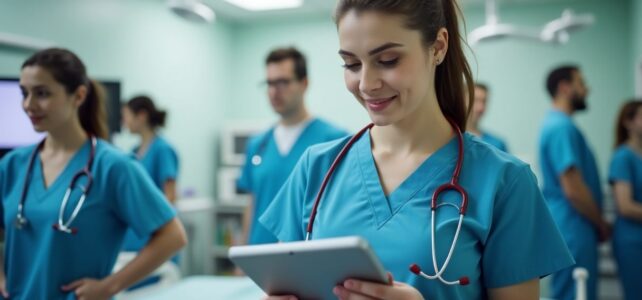
In the vast field of the medical world, nurses play a key and indispensable role. They are the bridge between the patient and the doctor, and this central position leads them to use a wide range of technical and specialized equipment. This nursing equipment is vital to ensure not only the comfort of patients but also the effectiveness of treatment.
Each tool has been meticulously designed to meet specific needs. Their daily use requires not only technical skills but also a deep understanding of their impact on patient health.
The Fundamental Tools of Nursing Equipment
The basic nursing equipment forms the foundation upon which the essential daily care provided to patients rests. These instruments, although often discreet, are of paramount importance.
- Thermometer: Essential for measuring body temperature, it is crucial for detecting any abnormalities or fever in a patient.
- Stethoscope: An emblematic tool of health professionals, it allows listening to the internal sounds of the body, such as heartbeats and respiratory sounds.
- Sphygmomanometer: It is crucial for monitoring blood pressure and preventing complications associated with hypertension.
- Sterile gloves: They provide a protective barrier against infections during any medical procedure.
These tools, although relatively simple, are the first line of diagnosis and assessment, allowing for the establishment of an initial health status and the adaptation of care accordingly.
Specialized Equipment for Advanced Care
When care becomes more complex, nursing equipment is enriched with sophisticated tools designed to address specific and sometimes emergency situations.
Infusion systems play a vital role in the administration of medications and fluids. Thanks to them, nurses can precisely adjust the necessary doses.
Drains are also essential for evacuating unnecessary bodily fluids after surgery or injury.
Vital signs monitors allow for constant real-time monitoring, ensuring a rapid response in case of changes in the patient’s condition.
Modern Technologies and Innovations
With advances in technology, nursing equipment has significantly transformed, integrating innovations that improve the quality of care and the accuracy of diagnoses.
The portable scanner and the ultrasound machine are tools that are becoming increasingly accessible and allow for thorough and localized examinations.
Moreover, mobile applications and medical tablets facilitate the collection and analysis of health data, integrating electronic medical records for quick and shared access among health professionals.
Healthcare workers thus benefit from a clear and comprehensive view of the patient’s condition, optimizing clinical decision-making.
The Importance of Sterilization and Hygiene
In the medical field, hygiene is paramount. Nursing equipment must undergo rigorous sterilization processes to ensure patient safety and prevent nosocomial infections.
- Use of disposable materials: In many cases, equipment is single-use, thus avoiding any cross-contamination.
- Steam sterilization procedures: Autoclaves are commonly used to sterilize reusable instruments.
- Ongoing training on hygiene practices: Nurses regularly receive training to stay informed about best practices in sterilization and hygiene.
These rigorous practices ensure a safe environment not only for patients but also for all medical staff.