
Contacting an online decoration team on a small budget requires knowing where to look, what to check, and how to formulate your request. The market for remote decoration services has structured itself around a fairly standardized process, but not all providers offer the same level of service or guarantees. Asking the right questions before the first exchange avoids unnecessary back-and-forth and disappointments regarding the final bill.
Check the guarantees before contacting an online decorator
One point remains largely overlooked by individuals: the title of interior architect is not regulated in France. Any provider can display this title on their website without a diploma or registration with a professional order. For a decoration consulting mission (color choices, furniture arrangement, mood board), this is not a major issue, provided you check the portfolio and client references.
However, as soon as the mission involves structural work (moving partitions, modifying electrical or plumbing circuits), the question of insurance changes in nature. Decennial insurance becomes necessary when the professional guarantees project management or coordinates work that may affect the building’s stability or waterproofing. A simple decoration consultation generally falls under Professional Liability Insurance, not decennial insurance.
Before sending a message via a contact form, explicitly ask what type of insurance covers the proposed service. Serious teams display this information or communicate it during the first exchange. On the decopascher.fr website, this initial contact step allows you to ask these questions in advance.
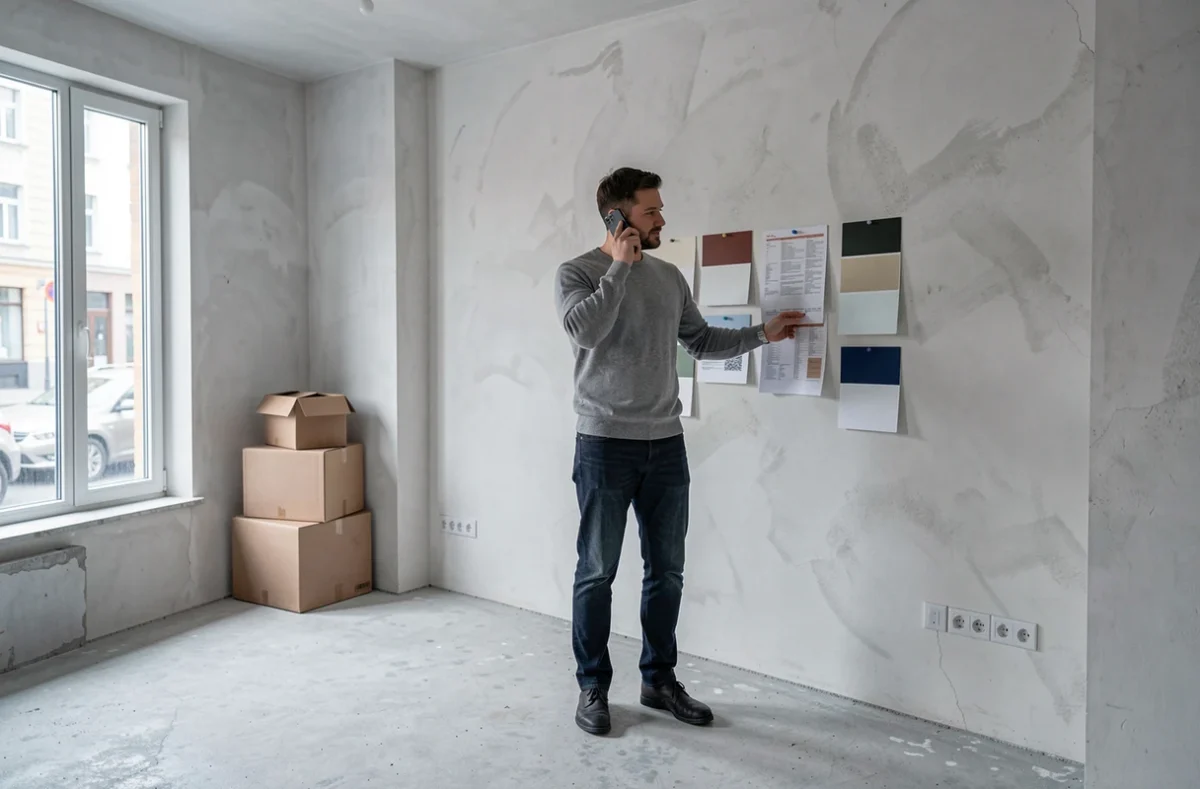
Typical process of a low-cost remote decoration request
Online decoration services follow a largely standardized process. Understanding this flow helps prepare a solid file and compare multiple quotes on an identical basis.
What you need to provide
- Photos of each room concerned, taken from several angles, with natural lighting if possible. Blurry pictures or those taken at night distort the analysis of existing volumes and colors.
- The precise measurements of the space: length, width, ceiling height, location of openings (doors, windows). A scaled plan, even hand-drawn, speeds up the decorator’s work.
- A clear indication of your budget for furniture and accessories. Without this framing, recommendations may far exceed what you are willing to spend.
- Your usage constraints: young children, pets, remote work in the room, lighting issues. These elements guide material and layout choices.
What you receive in return
Most teams offer a first video conference appointment lasting about 30 to 45 minutes, followed by the delivery of a mood board or a recommendations document within a few business days. This format allows you to send the same file to several providers and quickly compare the proposals received.
The classic trap is to confuse “decoration advice” with “complete project with 3D plans.” The former costs significantly less but remains oral or synthetic. The latter involves measurable design work, with detailed deliverables. Always check what is included in the quoted price.
Online decoration coaching: distinguishing one-off advice from tailored projects
Online decoration coaching has developed as an accessible option for small budgets. It generally consists of a targeted exchange about a room or a specific problem (what color for a dark living room, how to reorganize a narrow bedroom).
One-off coaching does not replace a complete design service. It is suitable when you already have a direction in mind and are looking for validation or adjustments. If you are starting from scratch in an empty home, a more structured approach will likely be necessary, even at a low cost.
Field feedback varies on the actual value of coaching sessions lasting less than thirty minutes. Some users receive concrete leads that transform their space. Others come away with advice that is too generic to apply. The difference often lies in the quality of the file provided in advance: the more precise your photos, measurements, and constraints are, the more the decorator can get straight to the point.

Tax credit and decoration: what is eligible and what is not
An idea circulates that hiring an interior decorator would entitle one to the “personal services” tax credit. Decoration consulting is not eligible for this tax scheme. Activities covered by the personal services tax credit concern home assistance (cleaning, childcare, assistance for the elderly), not consulting or decorative design services.
Some providers maintain confusion by vaguely mentioning “tax benefits” on their contact page. Before committing based on a supposed tax reduction, check directly with the tax administration if the proposed activity is indeed listed among the eligible personal services.
Contact form, messaging, or phone: which channel to choose
The contact form remains the most common channel for an initial contact with an online decoration team. It has the advantage of leaving a written record and allowing you to attach photos and documents directly.
Instant messaging (WhatsApp, Messenger) speeds up exchanges but complicates long-term follow-up. Files can easily get lost, and conversations become difficult to retrieve after a few weeks.
- Form or email: to be prioritized for the initial request, sending the file, and receiving the quote.
- Video conference: suitable for the consultation appointment, where the decorator comments on your photos in real-time.
- Phone: useful for clarifying a point in the quote or negotiating a rate, less suitable for transmitting visuals.
Always keep a written record of what has been agreed upon, particularly the exact scope of the service and the expected deliverables. A confirmation email after a phone call is sufficient to formalize the agreement.
The choice of channel also depends on the provider: some teams operate exclusively via email and video, while others offer an integrated chat on their site. Adapt to the proposed mode of operation, but always demand a written summary before any payment.